

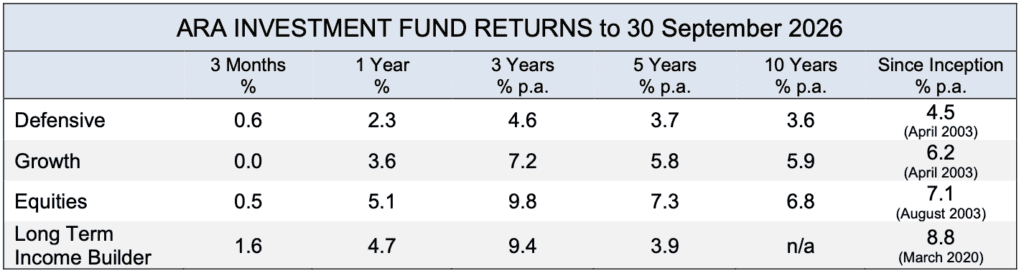
Returns in the table above exclude the value of franking credits. All ARA Investment Fund portfolios generated franking credits from investing in Australian shares, the benefit of which is realised by way of a credit against the investor’s own tax liability. For an investor in the ARA Investment Fund for the full 2025/26 financial year, the value of the tax credit expressed as a percentage of their investment value was approximately:


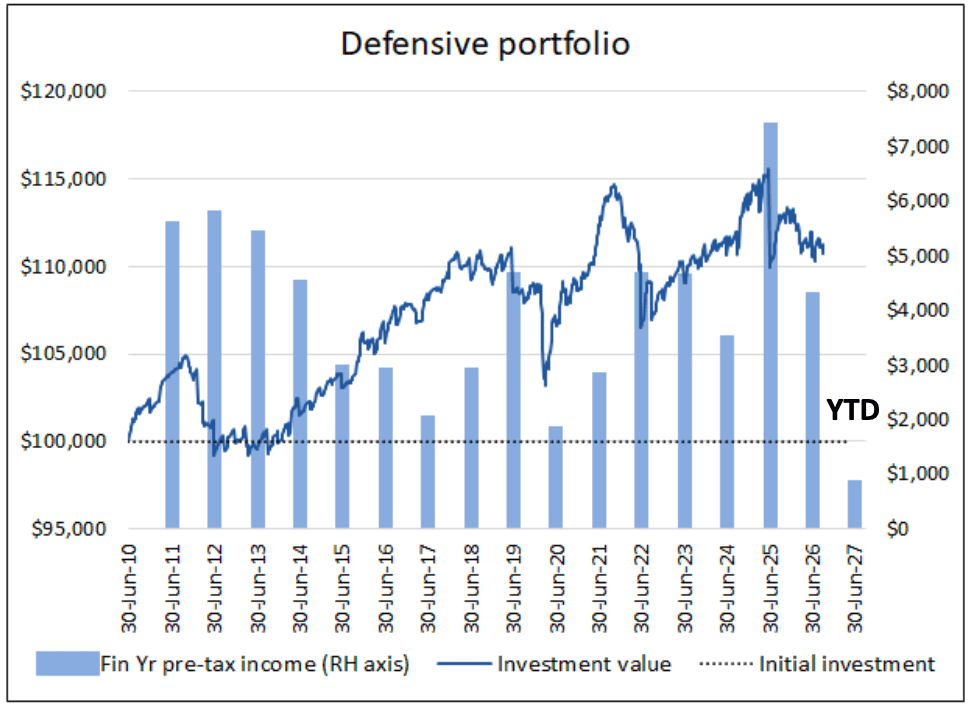
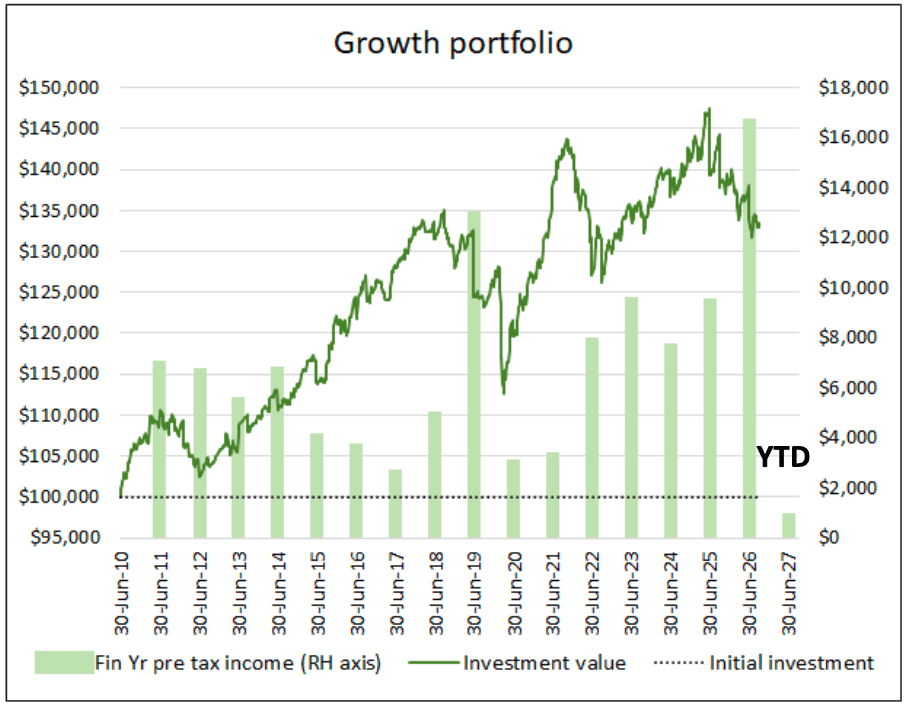
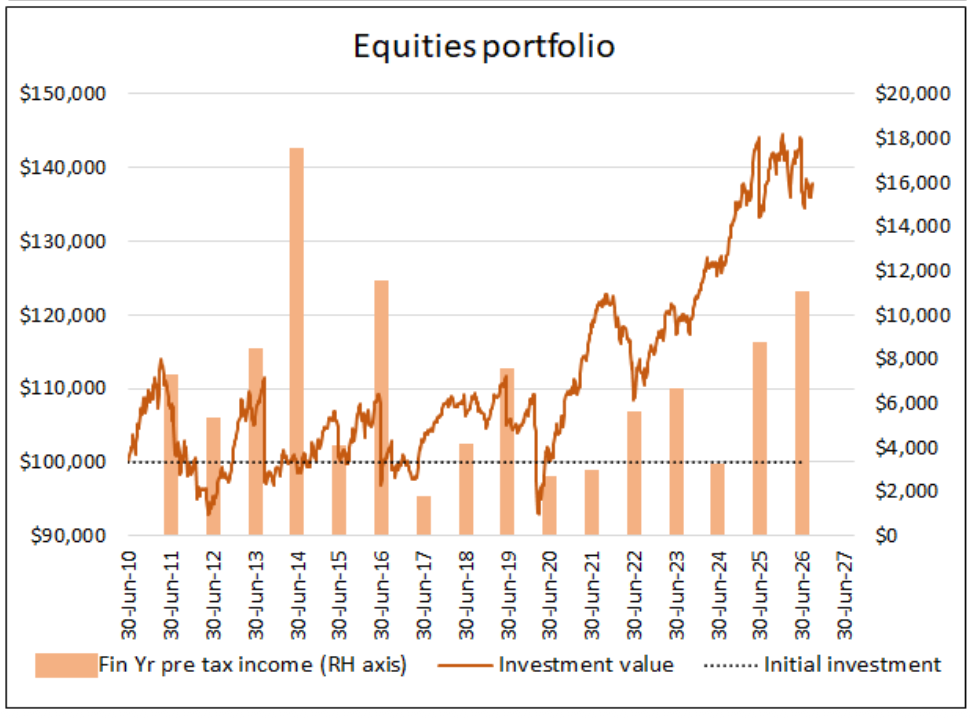
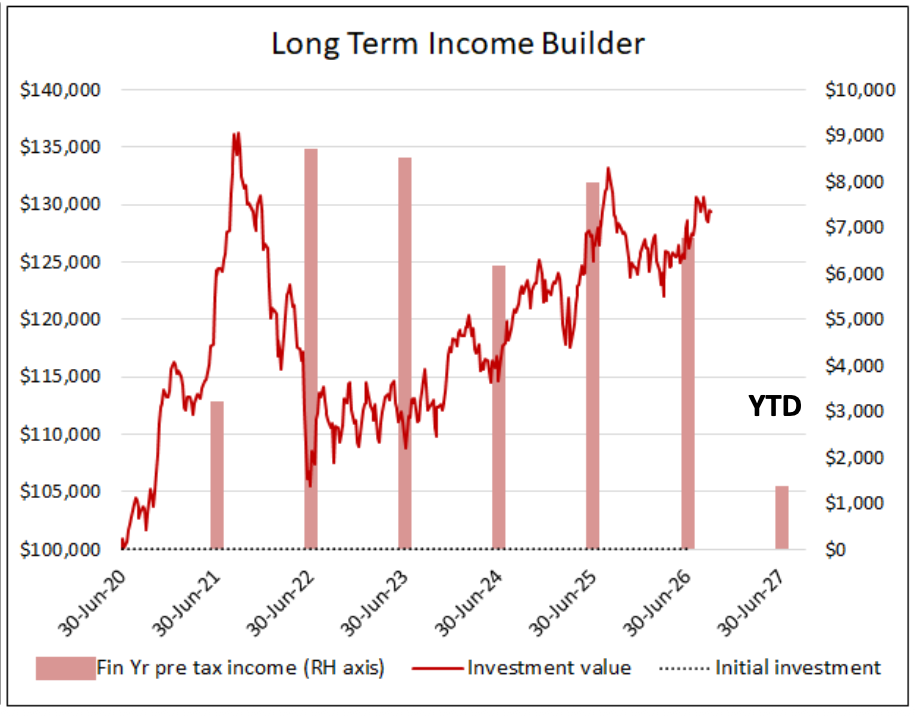
September quarter results landed somewhere between flat and fair. We shouldn’t read too much into quarterly outcomes, but at the recent round of investor updates it seemed that there was more than the usual level of concern in the room(s) at the general state of affairs out there in the investment world. So let’s set down the main themes and challenges as we see them at present, and what we’re doing about it.
The Big Three, with some obvious cross-pollination, are these:
- The Fracturing and Re-shaping of the World Order – Geopolitics writ large. And is there a changing of the guard away from the US and its currency?
- Indebtedness – We have witnessed, in several of the major economies of the world, decades of seemingly unrestrained growth in debt and the cost of servicing it.
- AI – Real or Not? Threat or Opportunity? Friend or Foe?
As demand for debt and the risks associated with debt servicing rise, interest rates tend to go up – not helped by supply disruptions like oil shocks and war-mongering. Australia looks to be later in the cycle (that is, closer to the peak) than the US.
A good way to avoid the pitfalls of debt like this is to avoid investing in government, or corporate bonds, and indeed we hold no such bonds at this time. The vast majority of our fixed interest exposure is by way of bank term deposits and guaranteed annuities. And we have been bolstering our spread of deposits now that interest rates have climbed out of the cellar they were in a couple of years ago, and are perhaps nearing their peak.
There’s no argument that instability and volatility have grown, probably even by design in certain quarters, which makes forecasting even more difficult. For example, apparently JP Morgan’s oil price modelling software has been moth-balled, at least temporarily, because the old rules no longer apply. And it’s widely touted that the USA and its currency might be slipping from their place at the head of the global economic pack. But right now there is no-one really ready to take the reins, so there is some breathing space.
Years of economic dominance and reliance on the US financial sector, and the hay that was made while the sun was still shining, take time to break down. It’s still the case that if you want to be in certain sectors, notably technology, in a meaningful way, really you have to look to the US, notwithstanding the giant strides being made elsewhere.
Which is a neat segue into the AI question. Most new technologies have their critics and doomsayers as well as optimists regarding their broader impact, but as an investment opportunity the AI phenomenon is one you ignore at your peril. Fortunes are there to be made, missed or lost.
As in many a gold rush in the past, a reliable way to play the game is to sell shovels to the miners rather than dig the holes yourself.
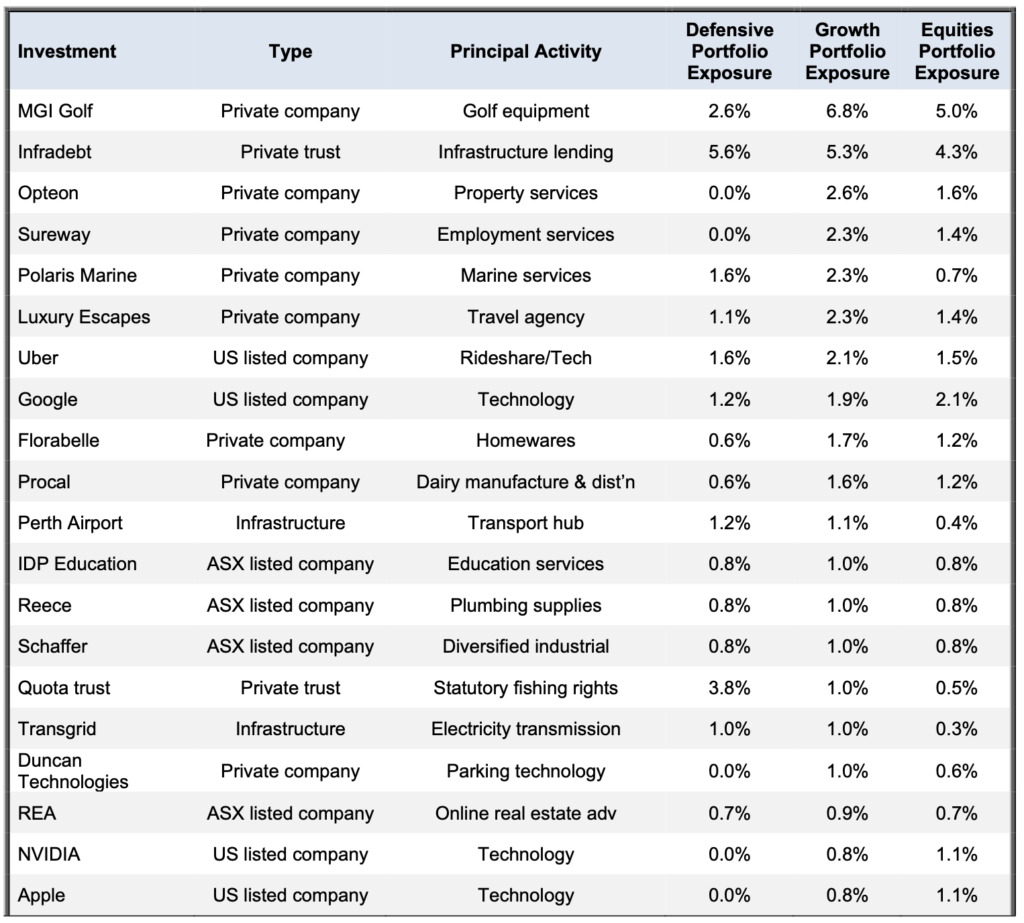
Alert readers will notice that names such as Google, NVIDIA and now Apple have worked their way into the list of major holdings below. While this is counter to our long held “underweight” view on the US, it acknowledges the pre-eminence of the US technology sector, and targets well-established companies in prime position to benefit from AI without running the risk of landslides at the coalface.
The Equities portfolio holds a couple of more opportunistic plays, via recent additions such as the Apis Global Small Companies Fund and the US Opportunities Fund. The ARA approach sees exposure to Equities as suited to long term, more risk-tolerant money that is not expected to be drawn on. But for Defensive and Growth we will stand by the long-held mantra of erring on the side of caution even if there might be an opportunity cost in the short term.
Difficult markets are when active portfolio management really earns its keep. Passive or index management techniques by design deliver what the targeted market does. In good markets everyone does well. But when things get tough it’s critical to be continually alert to the diversification, value and risks inherent right across the portfolio, and right down to asset level, rather than be tossed around with the market tides.
This is a brief overview of themes we will re-visit in updates throughout they year.
So, who’s got what?
The table below shows the ARAIF’s investments at the time of writing. Please note, the percentages refer to the proportion of each portfolio allocated to that investment, not its rate of return.
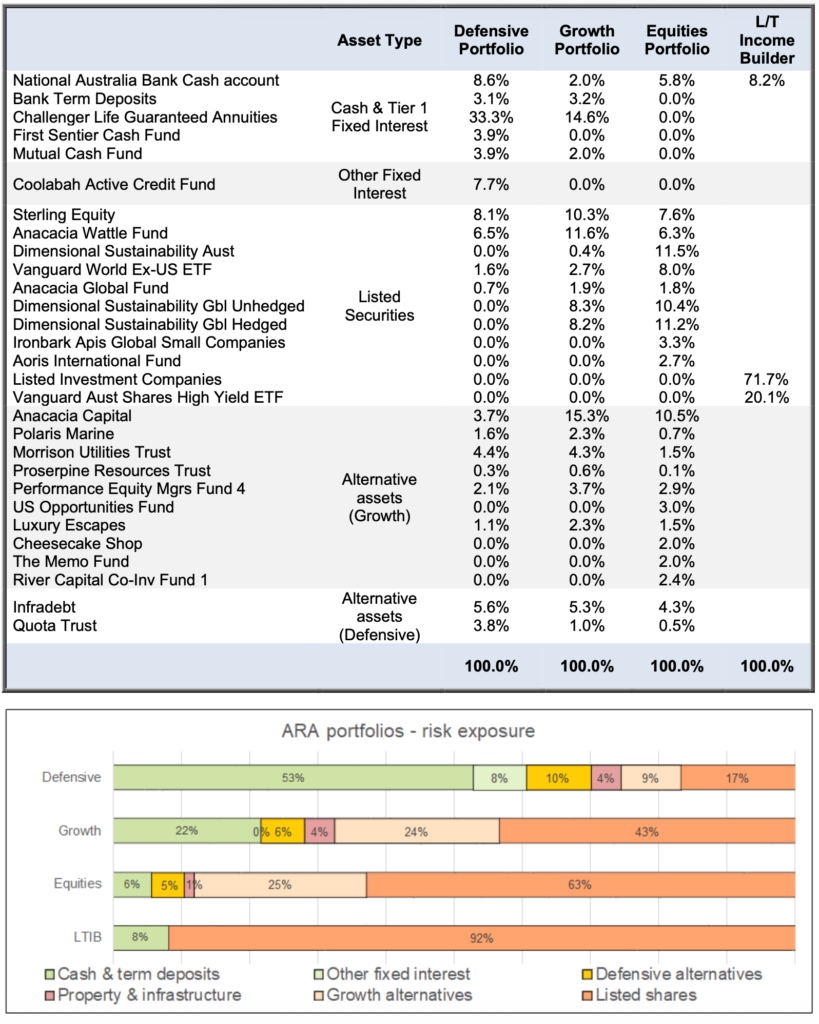
Major Holdings – diversified portfolios
Apart from bank deposits and other interest-bearing accounts, Defensive, Growth and Equities portfolios invest in a range of assets through the fund managers listed in the table above. If we drill through to the assets selected and overseen by those managers, there are in fact over a hundred individual securities providing diversification of risk and exposure to a wide range of opportunities.
The table below shows the 20 largest individual holdings and what proportion of each portfolio they represent. These are the investments that will have the biggest impact on the portfolios’ returns.
Returns quoted in this report are after all costs, and before the application of management fee rebates. Return figures are pre-tax and assume the re-investment of distributions. 3-month return figures are for the period to 30 September 2026 and are not annualized. Data source ARA Consultants Pty Ltd & Context Capital (except where indicated).
ARA Consultants Pty Ltd provides this update for the information of its clients and associates. If you do not wish to receive this or other information about ARA in future, please contact us on (03) 9853 1688.
This document has been issued by ARA Consultants Pty Ltd for its own use and the use of its clients. Fundhost Limited (ABN 69 092 517 087) (AFSL No: 233 045) (Fundhost) is the issuer of the ARA Investment Fund (ARSN:104 232 448). Information contained in this document is general information and is not intended to constitute nor does it purport to offer any specific or individual investment advice. Whilst every effort has been made to ensure the accuracy of the information contained in this document, neither ARA nor Fundhost accept any liability in relation to anyone who makes and acts upon a decision based upon that information. No person should make a decision based upon the information contained in this document without first seeking and obtaining the appropriate professional advice relevant to their own individual circumstances and financial needs. You should consider the Product Disclosure Statement in deciding whether to acquire, or continue to hold the product. The PDS and applicable Target Market Determinations are available at www.araconsultants.com.au or by contacting ARA by phone on (03) 9853 1688 or by email at info@araconsultants.com.au. We also caution that past returns are just that, and the fact that they have been achieved previously does not guarantee or imply that they will be achieved again.
If you would like a pdf version of this update for your files you can download it here: September 2026 Quarter Investment Update.